What do you want to be when you grow up? Ask a Gen Z student, and you may hear plumber, electrician, or contractor. Today, 55% of Gen Z graduates say they’re considering a career in the skilled trades, and 93% believe the trades offer more economic security than college.
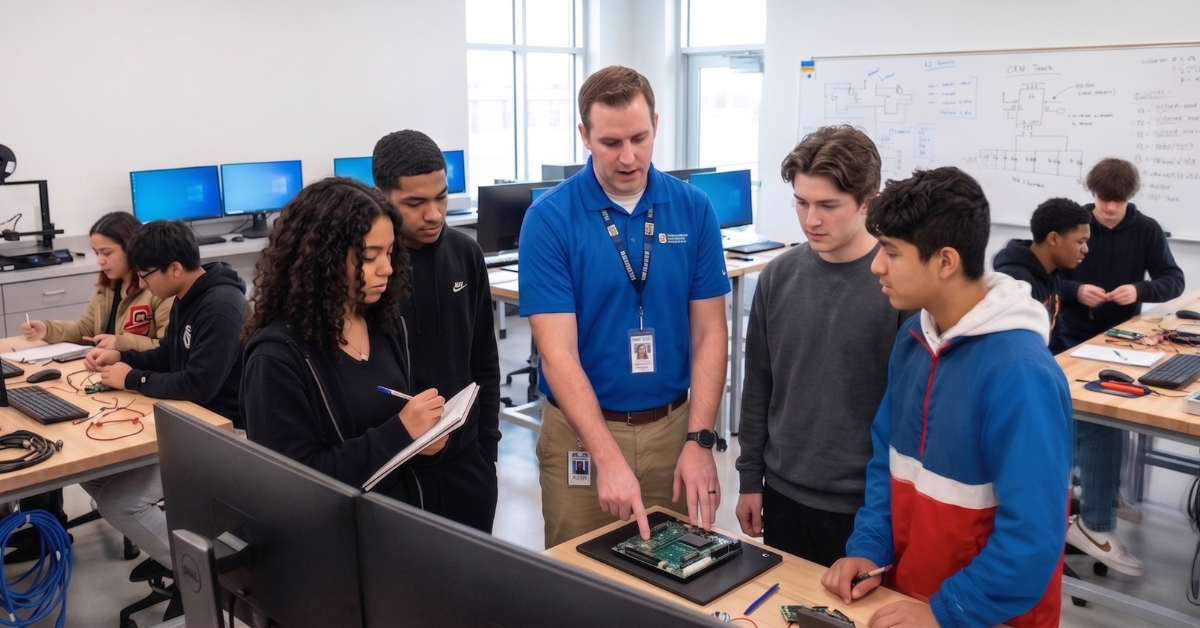
While this is welcome news for the labor-squeezed trades industry, it presents a challenge for skilled trades educators. As Gen Z learners flood their enrollment lists, many discover after they arrive that trades classrooms don’t meet their expectations and learning preferences.
Programs that haven’t adapted their delivery models are seeing disengagement, lower completion rates, and rising attrition. This post unpacks how Gen Z students learn and how institutions can design programs that benefit everyone.
Who Is Gen Z in the Trades Classroom?
Gen Z, born between 1997 and 2012, is the first truly digital-native, mobile-first generation. As a result, this generation thinks and engages differently from past generations. Here’s what to expect:
- Short attention spans: Gen Z spends up to nine hours a day online and has a strong preference for short-form videos and content. This often manifests as nonlinear content consumption, task-switching, and multitasking. Learners are willing to consume long-form media that’s interactive or about a topic they care about, but have a low tolerance for content they deem irrelevant.
- Information on demand: Gen Z grew up with a wealth of information at their fingertips. These learners are used to finding answers by keyword search or conversational queries, and navigating a physical or even PDF manual for reference doesn’t come naturally.
- Visual and interactive learners: Gen Z show a strong preference for visual, interactive, and active learning. Four out of five learners agree that they would rather watch a video than read a chapter. Students enjoy hands-on, active learning.
- Digital and mobile learning preferences: In one study, 100% of Gen Z learners said they learned more from technology than lectures. 81% of Gen Z prefer to submit their work online, and 87% like having course announcements and reminders sent to their phones.
- Connection to the real world: Gen Z learners want to understand the “why” behind their course content, to know how theory impacts hands-on application and their future careers.
- Expectation for immediate feedback: Waiting days or weeks to find out how they’re doing feels foreign to many Gen Z learners.
Learn more: 5 ways to connect with Generation Z in the classroom
Why the Traditional Trades Training Model Is Failing Gen Z Learners
Compare this learner profile with how most trades programs still operate: lecture-heavy instruction, credit hours tied to seat time, and delayed feedback and hands-on practice. While many programs have solid content, their delivery model wasn’t built with this new learner in mind. Common disconnects include:
- Seat-time vs. competency: In most trades classrooms, progression is tied to hours logged rather than skills demonstrated. Gen Z is used to leveling up when they’re ready, not on a set class schedule.
- Theory before application: When technical or theoretical concepts come before any hands-on context, students can lose interest and disconnect early.
- Missing feedback loops: Gen Z is accustomed to real-time signals similar to the apps and games they use daily, like a green checkmark or a progress bar. Programs that offer feedback only at the end of a module or grading period leave a gap.
The Cost of Getting It Wrong: From Disengagement to Attrition
It’s tempting to treat disengagement as a “soft” pedagogical issue — something to address after more pressing priorities. But student dropout and attrition quickly become a funding and revenue problem.
Ultimately, programs that don’t adapt to Gen Z learning styles will feel the ripple effects in enrollment, completion rates and learning outcomes.
Start by asking yourself a few questions:
- What is your annual student dropout or attrition rate?
- Why do students typically drop out — is it frustration with technical concepts, a lack of support or mismatched expectations?
- When a student drops out, what does that mean for your FTE (Full-Time Equivalent) funding or tuition revenue per student?
- What is your annual attrition cost?
Annual attrition cost formula
Annual attrition cost = Number of student dropouts per year X funding/tuition revenue lost per student
Here’s what that looks like in practice: if a program loses 15% of its 60-student enrollment annually, and each student represents $8,000 in state FTE funding or tuition, that attrition is costing the department $72,000 a year in lost revenue— while also shrinking completion rates and putting pressure on accreditation and future funding decisions.
NCES data shows that community colleges see nearly 40% of first-year students leave before their second year. The impact adds up quickly. By closing the engagement gap, institutions can retain more learners, improve outcomes, and build a stable financial foundation.
4 Effective Strategies for Gen Z Learners
The good news is that educators now have an evidence-based picture of which strategies work well for Gen Z learners. Here are four that we recommend at Interplay Learning.
1. Gamification and Progress Mechanics
Research shows that gamification can significantly improve motivation, engagement, and knowledge retention across training contexts. Badges, leaderboards, and visible skill progression turn an abstract idea like “mastery” into a tangible path for students with motivation and rewards.
For trades programs, that means a student can watch their competency bar fill in as they master new skills and inch closer to entering the workforce. Gamification works best with clear goals, feedback, and progress tracking.
2. Interactive, Simulation-Based Practice
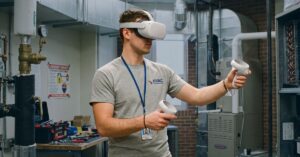
Simulations give students a safe environment to fail, retry, and build confidence before ever touching real equipment. The appeal for Gen Z learners is that simulation mimics the same trial-and-error, low-stakes repetition they know from gaming, except these skills translate directly into job-ready skills.
For example, a 3D simulation of repairing an AC unit helps an HVAC learner to troubleshoot and find the right answer with unlimited practice. These kinesthetic movements create neural connections that boost memory. One study of under-resourced teens found that learners using virtual reality training improved retention by more than 35% compared with peers in traditional classroom settings.
3. Microlearning
Lecture-based learning asks students to hold a lot of information in their heads before they can ask questions or test their knowledge. Instead, microlearning delivers value in short, focused bursts that can be completed inside or outside of class.
For a trades program, that can mean replacing a 45-minute lecture on refrigerant cycles with a handful of five-minute mobile modules a student can work through during class or on the go.
Research backs the format: microlearning has been shown to lower cognitive load while increasing positive outcomes for knowledge acquisition, recall, problem-solving, completion rates, and self-efficacy.
4. Immediate, Specific Feedback Tied to Competency
Gen Z students prefer real-time feedback that lets them know how they’re doing immediately. However, assessments and grading are labor-intensive for instructors, who often have 30 students at a time.
Instead, programs can supplement instructor assessments with technology-based knowledge checks so that students don’t progress beyond what they’ve mastered. Simulation-based assessments are another excellent way for learners to gain feedback with interactive signals and unlimited practice. With these tools, instructors can focus on students who are struggling and need 1:1 support.
Shifting from Seat-Time to Competency-Based Training
Competency-based education (CBE) flips the traditional model: instead of progressing after completing a set number of classroom hours, students advance when they can demonstrate they’ve actually mastered a skill.
This shift already has research behind it in technical and vocational settings. A 2025 study of vocational students found that competency-based training was strongly associated with high skill proficiency across technical areas, from workshop safety to communication.
For trades programs, CBE is effective for multiple reasons:
- CBE naturally supports the autonomy and pacing that Gen Z learners respond well to.
- Simulation and interactive tools make competency measurable for funding and accreditation purposes.
- CBE boosts student engagement and retention rates: The earlier students build confidence, the more support they receive, and the more engaged they become, since they can see their own progress in real time.
Getting Started: Practical Strategies Programs Can Start Using Now
To get started with Gen Z learning strategies, institutions don’t need to throw out their curriculum. Start with small modifications to your program design, then assess and scale what’s working.
- Build early wins into curriculum sequencing. Give students a taste of hands-on success before layering in more complex theoretical concepts. For example, start day one with a simulation that shows the whole system they’ll be learning.
- Use simulation or gamified modules to front-load practice. Let students get the feel of working hands-on and build skills and confidence. This hooks students’ curiosity and engaged them with multimodal content.
- Add structured feedback checkpoints so that students always know where they stand, and instructors can see who needs support at a glance.
- Train instructors on Gen Z engagement techniques, not just technical content delivery. How you teach matters as much as what you teach. Build in time to train instructors on effective teaching strategies and technology.
For a deeper playbook on implementation, access our guide Cracking the Code: Engaging Generation Z in the Classroom.
Why the Future is Bright for the Next Generation of Tradespeople
In many ways, Gen Z is misunderstood. While some see them as distracted or unwilling to do the work, that isn’t true. The traditional teaching model simply isn’t built around modern learning styles.
Gen Z wants to get out of the textbook and into the action. They enjoy mastering difficult skills and working with their hands. They’re also highly focused on their future careers and financial independence. But if they don’t understand how a lesson connects to a real-world job or a paycheck, they will tune out.
Gen Z prefers learning formats that are interactive, on-demand, and fast-paced— much like the media they consume every day. Gamification, simulations, microlearning, immediate feedback, and competency-based training are tried-and-true strategies that belong in every educator’s playbook. By designing course delivery using these formats and teaching strategies, you can engage learners, boost outcomes, and stem the flow of attrition.
Ready to learn more? Preview Interplay Learning’s platform.