Last week, I heard the story of a Midwestern trade school whose HVAC program is shutting down due to the lack of instructors. There’s no shortage of student interest. More people want skilled trades careers than today’s training programs can prepare, but one of the scarcest resources in those programs is a qualified instructor’s time.
How a program spends its hours matters as much as how many seats it has.
Interplay has been building toward a different model for the design and sequence of skilled trades training for about a decade now. Our approach has always leaned heavily digital, paired with training that gets very precise on the physical side.
Simulation is how you scale the front half of getting someone ready. Precision on the physical side is how you make sure what they learned actually holds up once they’re standing in front of the real equipment. And, now, we’re expanding that approach to include skill verification.
This post is the first in The Skills Stack, our series that focuses on the interplay between high tech training and the hands-on workforce. Each post looks at one layer of the stack, and every layer is tailored to each customer’s workforce:
- Content designed with precision on what’s physical and what’s digital
- Simulation that gives learners unlimited, risk-free practice
- Certification built on credentials employers define, with learning that continues after
- Workforce intelligence from skill verification
We’re starting with workforce intelligence and Skill Verification, which we’re launching today.
Introducing Skill Verification
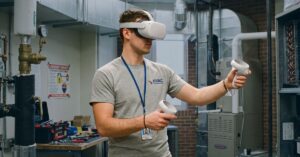
Skill Verification is a catalog of simulation-based assessments. Each one puts a worker through a real task in an interactive 3D environment and evaluates their performance step by step. The result shows which specific competencies a learner holds and at what level, beyond whether they finished a course.
In the Skills Stack, Skill Verification powers the workforce intelligence layer for the physical economy. It makes the rest of a program more precise in four ways:
Instructors know where to spend class time before class starts. If the results show that half the cohort has trouble reading construction drawings, the instructor can spend more time on drawings from day one instead of finding out on day three.
Lab access depends on demonstrated readiness, so scarce lab seats and instructor hours go to learners ready to use them. Experienced workers can skip what they already know. An HVAC technician moving into data center work and a career changer can follow different paths based on what each has shown.
Program operators get cohort-level insight before the most expensive week of training begins.
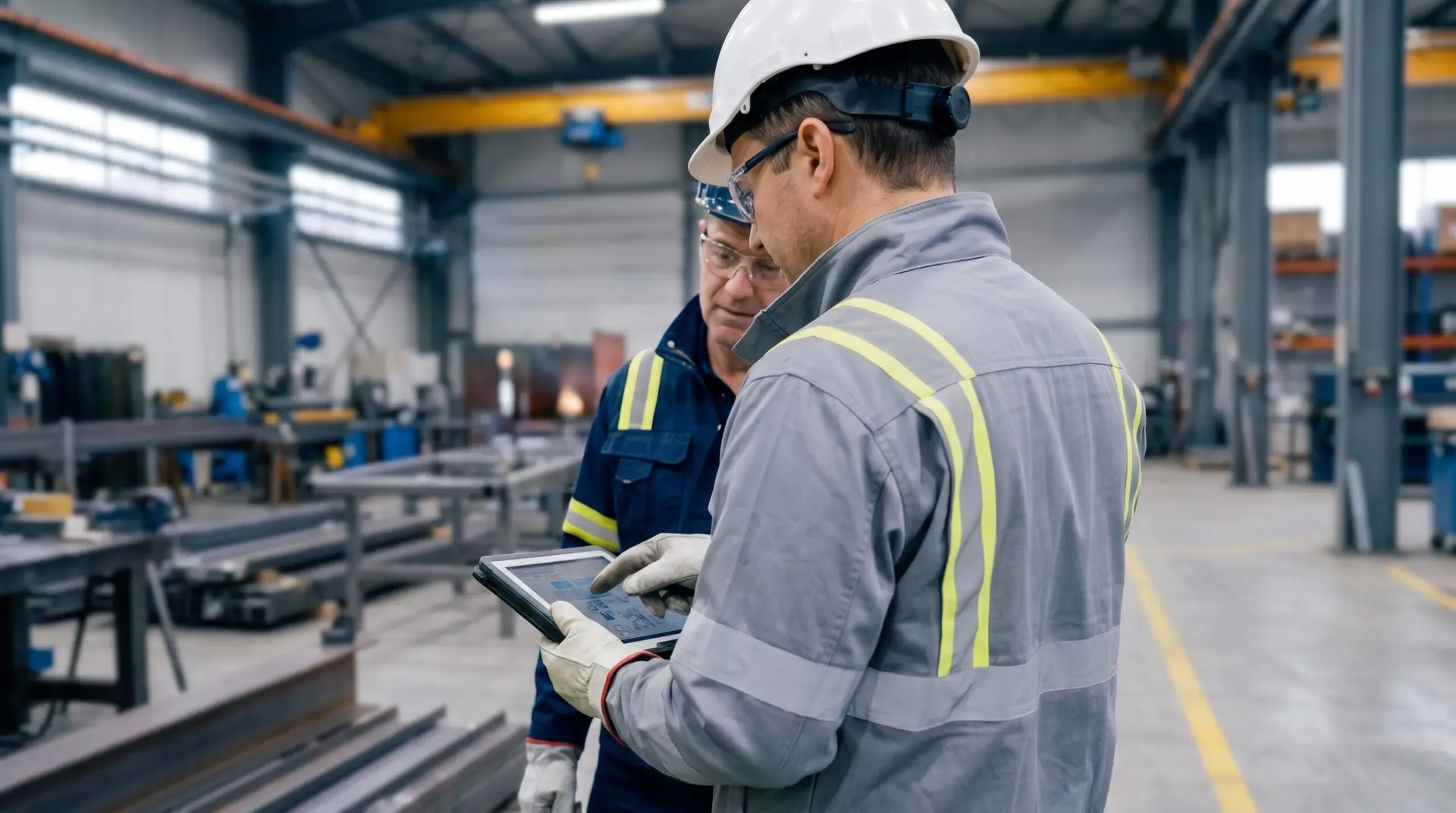
Skill Verification also works on its own for employers. It gives them objective, step-level evidence of how someone performed the work, which can support decisions like:
Who is ready to be dispatched or work independently
Which contractors are qualified to access a site
Where a worker needs targeted retraining instead of a full retrain
Who is ready for the next role or level of responsibility
Employers know what the job requires, and Skill Verification gives them a consistent way to check for it.
Skill Verification works alongside a manager’s judgment. It doesn’t replace a required certification or a final hands-on check. It gives leaders better evidence for those calls and gives workers a faster path to proving what they can do.
A Model Built With Partners, Not Instead of Them
Skill Verification works only alongside the community colleges, trade schools and unions that train people every day, often with far fewer resources than the scale of the problem deserves.
We trained roughly 180,000 people last year, and most of that happened through employer and partner programs already rooted in their communities. We’re honored to stand next to the people already doing this work, giving the whole system a way to prove it’s working at the scale this industry actually needs.
I don’t think we’re short on good people trying to solve this problem. I think we’re short on models built for the scale we’re actually facing. Skill Verification is our next step toward building one.
What Comes Next
Skill Verification is one layer of the Skills Stack, and each layer works best alongside the others. Next in this series, we’ll look at simulation.
See Skill Verification in action, and tell us which workforce decision you’re trying to solve for.