Data Center Maintenance Training
Build Workforce Readiness for Mission-Critical Operations
As data centers scale rapidly, teams need the skills to respond confidently, troubleshoot effectively, and operate reliably in high-pressure environments.
Where Training Gaps Become Operational Risk
Critical Infrastructure Depends on Workforce Readiness
In data centers, small issues escalate quickly when teams aren’t aligned on how to respond.
Inconsistent troubleshooting, hesitation during incidents, and over-reliance on escalation create unnecessary risk.
It’s not about effort. It’s about whether teams have been trained for these moments.
Built for Data Center Teams
The 90-Day Data Center Technician Ramp Plan
Close Gaps. Strengthen Performance. Reduce Risk
Help your team respond faster, work more confidently, and perform more consistently across every site. Combine hands-on simulations, targeted assessments, and role-based training to accelerate readiness for mission-critical environments.
Protect Uptime
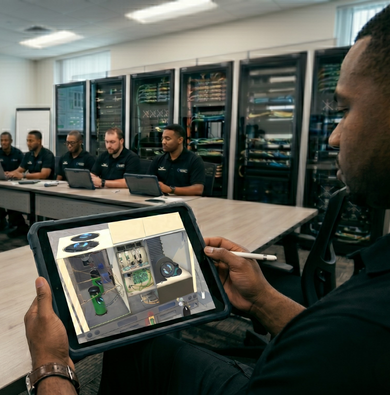
Use simulation-based training to help technicians practice diagnosing and responding, before small issues turn into bigger problems.
Standardize Performance
Reinforce consistent troubleshooting and decision-making across teams with structured learning paths and repeatable training.
Reduce Escalations
Build confidence through hands-on practice and targeted training, so teams can work through issues before escalating.
Validate Technician Capability
Identify skill gaps and close them with focused training tied to real systems and scenarios.
Reduce Operational Costs Before Issues Escalate
Give technicians the skills and confidence to troubleshoot faster, follow procedures more consistently, and respond effectively before small issues become expensive disruptions.
Minimize Downtime-Related Costs
Prepare technicians to respond more confidently and efficiently in mission-critical environments.
Reduce Reliance on External Support
Help teams build the skills to diagnose and troubleshoot more issues internally.
Prevent Costly Human Error
Reinforce operational procedures and system understanding before mistakes impact operations.
Improve Operational Consistency at Scale
Standardize technician readiness across teams, shifts, and locations.
Featured Training for Data Center Teams
Focus on the systems and skills that matter most to uptime and reliability.
More Data Center Resources to Explore
Frequently Asked Questions
How is Interplay different from traditional data center certification programs?
Traditional training programs focus on foundational knowledge and test preparation. Interplay focuses on operational readiness through hands-on simulations, role-based learning, and skill development designed for real-world maintenance scenarios. Technicians practice diagnosing issues and responding to failures before encountering them in live environments.
How does simulation-based training help data center teams?
Simulation-based training allows technicians to practice troubleshooting, maintenance procedures, and incident response in a safe, controlled environment. This helps teams build confidence, improve response times, reduce escalation reliance, and strengthen operational consistency across sites and shifts.
Can training be standardized across multiple data center sites?
Yes. Interplay helps organizations standardize training across teams, shifts, and locations through role-based learning paths, assessments, and consistent technical instruction. Powerful reporting and admin tools give leaders visibility into training progress, skill development, and workforce readiness across the organization.
How can data center training help reduce downtime and improve MTTR?
Many operational delays happen because technicians lack hands-on experience responding to real-world issues. By improving troubleshooting confidence and technical consistency, training can help teams resolve issues faster, reduce unnecessary escalations, and improve mean time to repair (MTTR).
How do we identify skill gaps within our maintenance teams?
Interplay includes assessments and reporting tools that help organizations identify technical strengths, readiness gaps, and training opportunities across individuals and teams. This allows managers to assign targeted training instead of using a one-size-fits-all approach.