
All trades programs in 2026 face challenges in program delivery, access, and scalability. The starting point for solving all of these challenges is funding. A program can’t launch, scale, or modernize without funding, but the old trades program model may not pass today’s funding committees.
This guide will cover what educational funders in 2026 are looking for — and what makes a strong foundation for program quality, delivery, and access.
How Trades Funding Looks Different in 2026
The U.S. is experiencing a renewed interest in boosting the skilled trades. In the past year alone, hundreds of millions of dollars in new funding have been approved for trades education through programs like Workforce Pell and BlackRock Future Builders, joining existing funding from Perkins V and WIOA.
While this is excellent news, these funding sources bring new criteria. Funding committees will hold schools to a higher standard when it comes to outcomes, access, and program replication. These changes represent a shift in direction and will shape new standards for trades programs moving forward.
What Every Trades Program Needs to Secure Funding
Every institution needs to prove that its trades programs align with workforce needs, lead to high-quality performance and outcomes, provide equitable access, and can scale to reach more learners. Here are the six building blocks that education leaders need for successful grant applications.
1. Alignment to Workforce Needs
Funders want to see that your training leads directly to career paths that pay well, are growing in your local area, and have program costs proportional to future earnings. For example:
- Workforce Pell: Programs must be aligned with “high-skill, high-wage, or in-demand industry sectors or occupations” as officially defined by your state.
- BlackRock Future Builders: Proposals must demonstrate a strategic fit with regional labor demand and must address documented workforce gaps in skilled trades.
How to demonstrate this: Research labor needs in your area, convene advisory groups of industry leaders, and connect with your state on emerging fields and skills shortages. Document how your programs (HVAC, electrical, plumbing, etc.) will fill these labor gaps. When possible, tie these to specific infrastructure projects like energy, data centers, or transportation.
2. Documented, Measurable Outcomes
Many of these new funding sources have strict accountability and reporting mandates that require the school to prove a program’s effectiveness. Institutions must prepare to track and report specific metrics such as completion rates, job placement rates, and earnings outcomes.
- BlackRock Future Builders: Grantees must submit biannual reports tracking Key Performance Indicators (KPIs), including enrollment, credential attainment, and job placement/retention (e.g., placement within 90 days of completion).
- Workforce Pell: Programs must meet strict federal thresholds to maintain eligibility. They must maintain a verified 70% completion rate and a 70% job placement rate (measured 180 days post-completion), along with reporting graduate earnings data.
- WIOA: To remain on the state’s Eligible Training Provider List (ETPL), providers must continuously track and report performance data, specifically including completion and graduation rates, job placement outcomes, and average earnings data.
How to demonstrate this: Set up alumni reporting metrics for future job placement and earnings data. Internally, track program milestones including enrollment, program completion, and credentials earned. A technology provider with built-in tracking and reporting dashboards can provide usage and competency data that’s application-ready.
3. Industry-Recognized Credentials
Funders don’t just want to fund classes; they want to fund careers. Qualified programs must lead to a recognized credential. The credentials must be stackable, portable, and valuable in the real world, whether it’s a state license, an industry certificate, or a completed apprenticeship. For example:
- Workforce Pell: Programs must result in a recognized postsecondary credential that is stackable (leads to advanced credentials or degrees) and portable (is broadly recognized by more than one employer).
- BlackRock Future Builders: Funded training programs must lead to industry-recognized credentials, journey-level certifications, or registered apprenticeships.
- WIOA: Providers must actively partner with local employers to ensure the curriculum teaches the exact skills the market needs, guaranteeing that graduates are job-ready.
How to demonstrate this: Collaborate with industry groups or audit local job descriptions to identify credentials necessary for entry-level or skilled roles. You can also partner with providers who offer credentials for employers themselves, like Interplay Learning.
4. Equity and Access for Underserved Populations
BlackRock, WIOA, and Perkins all emphasize serving populations facing barriers. This isn’t simply a nice-to-have; it’s part of the scoring rubric. This could include:
- Low-income individuals who face enrollment and attendance barriers.
- Justice-impacted individuals who are currently or recently incarcerated.
- Rural learners who don’t have easy access to a physical classroom or lab.
- Students with learning differences who need alternate learning formats.
- Learners from demographic groups who have faced overcoming systemic barriers or whose first language isn’t English.
How to demonstrate this: Document which groups of learners you are prepared to support in your community and what services or support you will provide. Show how diverse, non-traditional students can access your curriculum through online delivery and simulation-based training that replicates hands-on lab time.
5. A Scalable Program Model
Major grants are not looking to fund small pilots or single cohorts. They’re designed for programs that can impact learners at scale. You need to show that you have a clear, transferable program model that can serve increasing numbers of students over time.
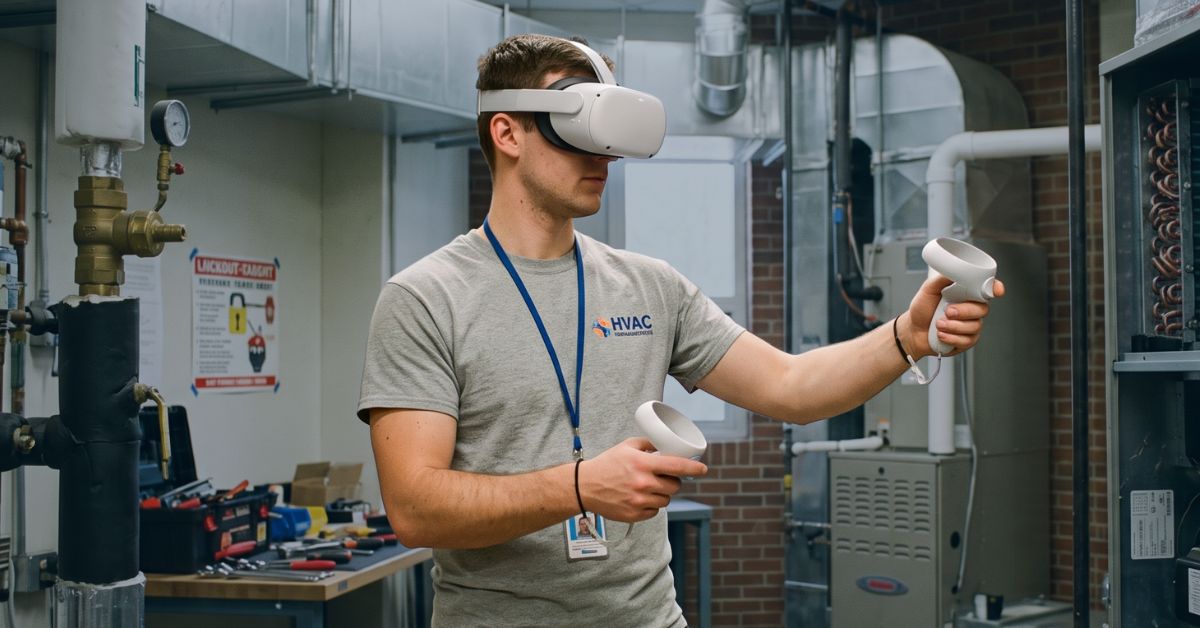
In the old model, schools couldn’t scale a traditional, hands-only trades program without spending millions on new physical labs and hiring new instructors. Funders like BlackRock are looking for innovative models that break the traditional ceiling, like simulation-based training and digital or hybrid delivery.
How to demonstrate this: First, take an evidence-based approach to tracking the outcomes and successes of your program. If this is a new program, consider licensing an out-of-the-box curriculum with proven outcomes. Next, demonstrate how you can grow enrollment without multiplying costs. Look at unique models like immersive, simulation-based training that removes physical capacity ceilings and doesn’t hinge on instructor availability.
6. Digital Technology Infrastructure
To tie all these components together, institutions need a digital infrastructure layer. While this isn’t specifically required by funding criteria, a digital infrastructure enables institutions to deliver effective, scalable, workforce-aligned programs and demonstrate outcomes.
-
- Pivoting to workforce needs: While institutions can’t build a lab or launch a new curriculum in under six months, they can partner with a digital provider to offer an out-of-the-box digital curriculum that matches trending workforce needs.
- Documenting outcomes: Schools can track learner progress, program completions, and other outcomes through online dashboards and learner reporting systems.
- Offering industry-recognized credentials: Institutions can deliver online prep courses and certifications for credentials like OSHA, EPA, and NATE that meet current standards.
- Supporting equity: Schools can offer hands-on simulations and flexible, digital program delivery that supports equitable access for learners who can’t access training through a traditional classroom model.
- Increasing capacity and scalability: Immersive, simulation-based training removes the physical capacity ceiling of hands-on labs. Interplay Learning enables programs to expand cohort sizes without proportionally expanding instructor headcount or facility costs — exactly the kind of scalable model that makes a grant proposal compelling.
Federal guidance from WIOA and the Department of Labor specifically names “technology-assisted” and online delivery as acceptable and encouraged ways to give flexibility for underserved populations. A strong digital foundation of online delivery and multiple learning modes is essential for institutions to serve all learners, pivot with workforce needs, and scale.
Ultimately, grantors don’t care what technology you use — they care about the outcomes it enables for students.
Building a Foundation for Funding Success
Educational funding is changing. Every program competing for a grant needs documented workforce alignment, equitable access, and documented outcomes. It needs to offer industry-recognized credentials and a scalable model.
Institutions that lay these building blocks with a technology infrastructure underneath will secure funding, but they will also grow healthier in every area. They’ll benefit from scaled capacity, flexible delivery, and a scalable, evidence-based model that they can replicate and grow.
Want to learn more funding strategies? Download our Construction Trades Funding Guide, watch the webinar, or contact our team.